

| Attachment | Size |
|---|---|
 TWGS RM.png TWGS RM.png | 1.28 MB |
Anonymous
User login
Please support the defense of Ukraine.
Direct or via Unclutter App
Active forum topics
- Talking to the Apple II
- Playing with PCMCIA to USB Adaptors - Mac Driver needed
- A2FileCmd — A two-panel file manager and disk toolkit for the Apple II
- APPLE 50 – 50 years of Apple as an ASCII-art slideshow for the Apple-1 (inspired by David Schmenk's Apple30)
- APPLE-1, HoneyCrisp Emulator: v1.5 will be the last major release.
Recent content
Navigation
No Ads.
No Trackers.
No Social Media.
All Content Locally Hosted.
Built on Free Software.
We have complied with zero government requests for information.
Looks good, did it create a KiCAD project with a schematic, board layout and generatable Gerbers so we can get PCBs made?
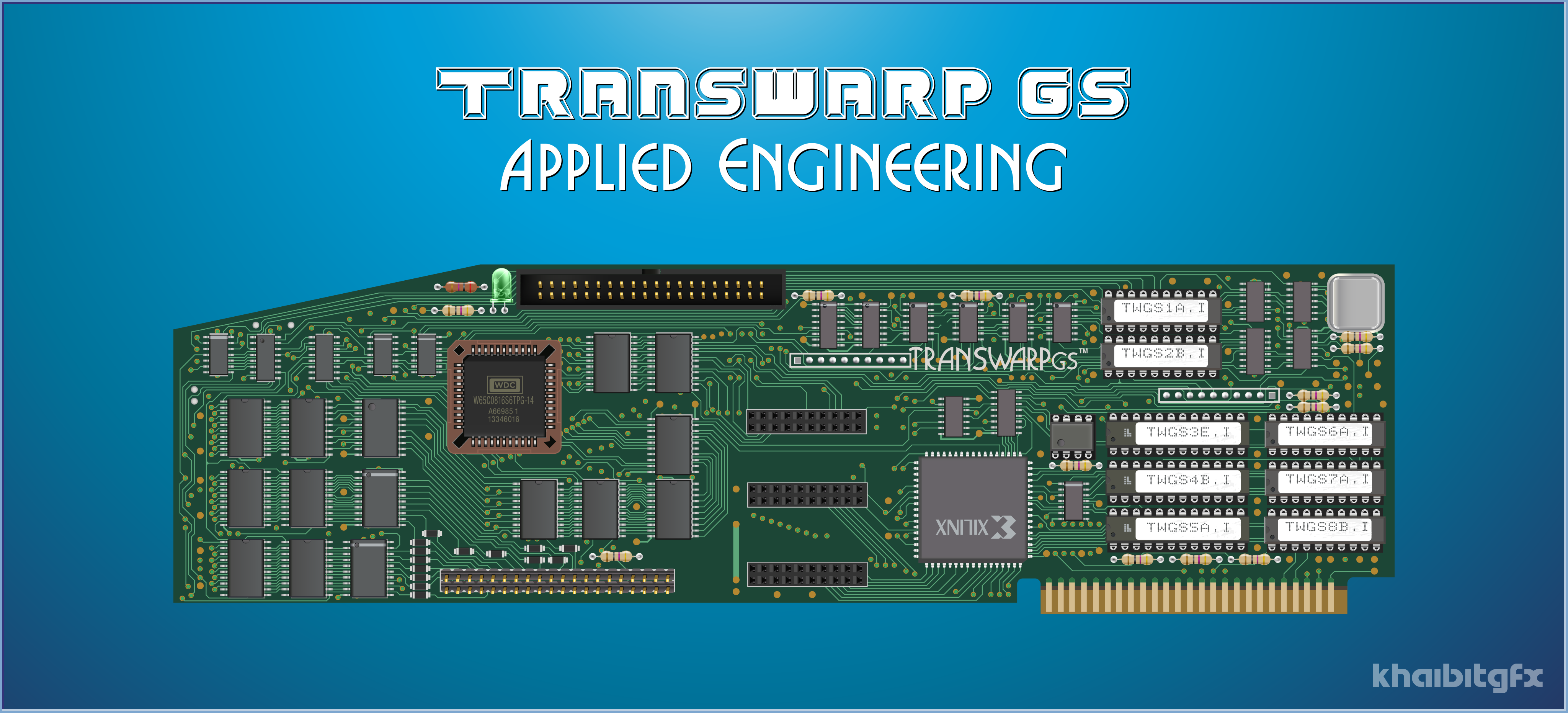
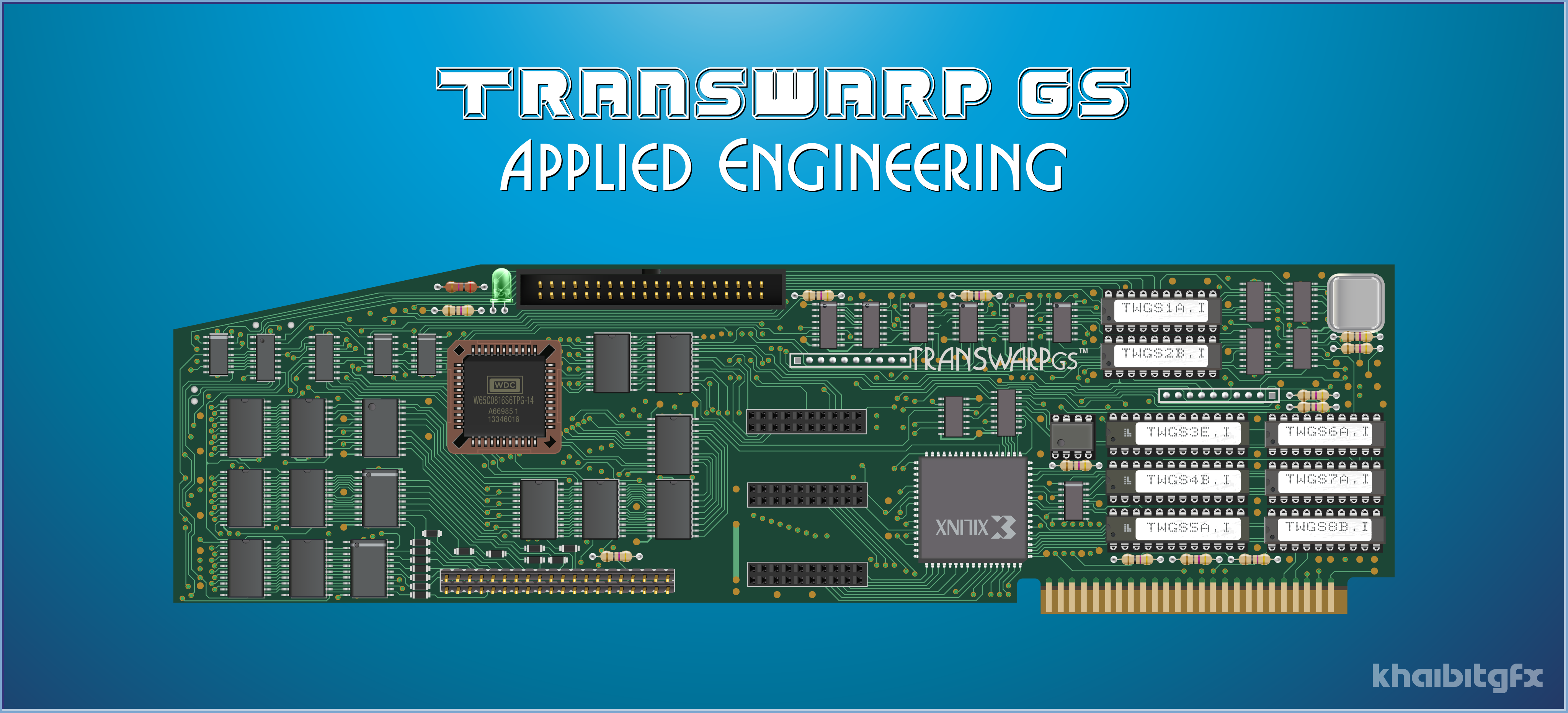
Rather strange how only resistors, but not capacitors, are shown. The picture looks most like this image: TransWarp GS - Front - With Mods.jpg
Incidentally, the second large chip, Xilinx XC2064 was the first commercial FPGA.
I intentionally left out the minor components, focused more on the major.
The text was done by me as AI can't do text at all, at least the consumer level AI, no idea what high end AI can do, I'd assume alot more.
It probably could create gerber foles and the whole schematic thing, I just did the top visual of the board. High-end AI that costs hundreds per month probably could do it, never tried as I don't have that kind of money to throw away on AI.
Which AI did you use and did it create an EDA project or just this image?
In post #3, "robespierre" wrote:
" Incidentally, the second large chip, Xilinx XC2064 was the first commercial FPGA. "
Uncle Bernie comments:
This may be an obstacle with cloning this card. These long obsolete XC2064 can still be bought in small quantities but if you avoid Chinese sellers (too many counterfeit ICs made there) then the prices being asked on Ebay (and elsewhere) are ridicolous. What is worse, there is no tool to generate logic equations from the config bit stream. So you can't extract the logic and put it into a more modern CPLD or FPGA.
Just to mention, I do have a tube of XC2064 left but these are PLCC.
- Uncle Bernie
That's the problem with FPGAs these days. The 5V ones have mostly all been out of production for years and are hard to find and either expensive or risky as far as getting junk or counterfiet or just ripped off by unscrupulous scamming sellers. If someone was designing a new Transwarp GS board today, that I'd probably suggest is to use something cheap and currently available like the Lattice MACHX02 family. The issue is of course being a more recent design it requires 74LVC245 to work with a 5V system. But things like the MMU and IOU replacements that are now proven to work shows that it can be done.
Ken seems to have created a tool for reversing the bitstream to logic terms: https://github.com/shirriff/xc2064
Check out how Ken Shirriff did it: https://github.com/shirriff/xc2064/blob/master/reverse-engineering-talk.pdf
As the bitstream is stored in the external serial EPROM did any one dump it and tried if what is linked above work?
I think building a 100% replica is not the best idea. There are a lot of GAL devices that could be easyily added to a larger FPGA.
So the good news reverse.py: Will (eventually) convert a raw bitstream file (RBT) into a LCA description file.
Are the GALs already dumped? If you want a 1:1 replica just copy the serial EPROM.
But the GALs and other logicdevices would be a bigger problem I think.
There is already a new version of such a device: https://www.applesqueezer.com
I seem to recall there is or was such a tool, called DeBit, but that the vendors try to suppress awareness of it.
A survey of this and other decompilers appears in Ritesh K Soni's masters thesis from 2013.
Applesqueezer is a nice product, but it is a totally different design. And it has one major caveat to the way it works -- it does not support DMA devices. So things like MicroDrive Turbo are a no-go. There are a number of other cards people like for the IIgs that have the same problem.
Either you want fast or you want compatible.
Why should I want a MicroDrive Turbo if I have an SD-Card already that is likely much faster?
Actually MicroDrive Turbo I don't know if you can assume a MicroDrive Turbo is slower given it uses a Compact Flash module, and those are sometimes faster than some SD cards. But it probably depends on the media being used on both sides and also the rest of the controller hardware.
You can see die photomicrographs and the architecture of the XC2064 / XC2018 here. Unfortunately, it seems that the author (Ken Shirriff) was not able to fully decode the bitstream due to irregular structures in the I/O blocks and CLBs along the edges of the grid.
I remember these XC2064 very well, we looked at them when they came out, and had the first generation "development software" for it, which was a sick joke, because nothing was automated, you got a lousy picture of the LCA on a CGA (or was it EGA already ?) PC screen and then you had to route the connections between the CLBs manually. All I remember is that there were different kinds of routing available, "long lines" just came up from my memory but I can't recall any more details.
This "development" software was almost useless and so we tossed everything XILINX into the trashcan. Which I now regret because having this early LCA kit today would be an interesting artifact documenting how the FPGAs began.
This only confirms the rule: never throw any development kit out. You might need it later. Indeed, I had some cases where customers from the 1990s somehow found out to contact me (only three people on the planet have the same first and last name) and wanted me to make changes to old designs I had made for them some 10-15 years earlier. Despite they had the source code ... they just never had bothered to buy the CAD tools themselves. And even back then you could not get these long obsoleted tools from the semiconductor manufacturers anymore. (I wonder how the MIC handles this issue with all the PLDs and FPGAs in the weapons systems which have lifetimes > 25 years).
Anyways, I have a nice collection of obsolete PLD/CPLD/LCA/FPGA in my basement, including some of these first XILINX LCAs in ceramic packages with golden pins. These may have been engineering samples. And they were too nice looking ('golden') so I did not throw them into the trash bin along with their unusable 'development' tools.
- Uncle Bernie
I think companies need to be forced to archive things like that. Everytime they dump a design that made it to the marked a complete set of documentation and Development kit needs to go to the national archive.
And when a tech company files bankruptcy the technical documents need to go to an archive.
Totally agree. This is part of the fight for the right to repair I believe: https://www.repair.org/world
Unfortunately our Democratie simulation is based on representative parties and parliament. As long as we don't get politics into modern times what would allow much more direct democracy this will likely never happen. As the parties that are specialised in things like that are usually border parties and the green parties that is supposed to be for ecologic thinking ignores things like that. If we could at least elect a party for each ministary the failure would not be as dramatic as they are now. As lobbyism is the driving force not democracy through elections.
Sorry for getting political, but the political systems are stuck in the 80th and the politicians seem to live more and more on a different planet.
I don’t see how a direct democracy will help. You put up a referendum on this and the big companies will simply put a lot of money into ad campaigns. And since most of the people don’t really care, the referendum will go their way.
Anyone who feels strongly about this needs to get involved now within the current system. Waiting for a direct democracy, which is unlikely to happen in the foreseeable future is the same as doing nothing.
In post #16, 'natas666' wrote:
" I think companies need to be forced to archive things like that. Everytime they dump a design that made it to the marked a complete set of documentation and Development kit needs to go to the national archive. And when a tech company files bankruptcy the technical documents need to go to an archive. "
Uncle Bernie comments:
This is wishful thinking. Even if everything has to go to a national archive (who pays for that ? The already overstressed tax payer ?) these stored data soon becomes useless because the technological platforms went away. If you have CAD software which runs on, say, and original IBM PC under DOS and has a "dongle", like the XILINX software for the first LCA had, there is NO WAY to ever run that software again unless you can find a still functional IBM PC in some computer museum (this particular "dongle" did not work on later PCs due to a different interrupt system).
Another anecdotal example: the semiconductor manufacturer I once worked for used production testers for their ICs which were already obsolete when the company was founded, but they were cheap to buy second hand. The problem: these testers were controlled by Data General Nova minicomputers ... impossible to keep those running well into the 1990s, so there was a company which made Nova clones on PC slot cards, and these platforms were used to keep the testers running.
Yet another fact: the semiconductor industry can't mass produce 5V capable CMOS ICs anymore (some exceptions though) because the 0.6um processes were shut down one by one. This has to do with market demand but also with the rising troubles to keep 30-35 year old tools in the wafer fabs up and running. Once that becomes too expensive (or impossible to find spare parts) they just shut down the whole fab and sell it for scraps. And unlike popular belief, you can't produce 0.6um CMOS designs in 350nm wafer fabs because the tools are different. I was told that this was the root cause why Lattice had to discontinue their ispLSI family (which is my favorite CPLD family). The exceptions I mentioned above are some semiconductor companies who still have their own wafer fabs able to process the 0.6um node but the question is how long can they keep these tools in good repair and keep these fabs running ? And these fabs are not accessible as silicon foundries. They only make proprietary products. So for the "fabless" semiconductor companies it's game over as far as 5V CMOS is concerned.
So there is no wonder that even we (as hobbyists working on long obsolete 5V systems) have trouble sourcing 5V capable FPGAs, even in small quantities. I think I see the troublesome tendency that even 3.3V capable FPGAs get harder to find, but I did not spend much time on looking into this. What I see is a lot of turmoil in the FPGA industry, and if you bet on the wrong horse, your project is toast. Because your favorite FPGA may disappear over night. This is a huge headache, not only for FPGAs. Every few weeks I get emails about parts I ordered in the past to become obsoleted by the manufacturer. The last email I got is that ST announced to discontinue the 1N5711 Schottky diode in the leaded form. This really sucks. I need lots of them for the YAAK keyboard.
We are not yet in the same boat as the tube aficionados (tube = triodes, pentodes .., for the tender of age, these are glass bulbs with pins and they glow a bit inside when powered up). CRTs are also going the way of the dinosaur. You can buy a nice private jet for $150000 with enough time on the turbines ... not flyable because the CRT for the EFIS display is burned out and there are no spares to be had. I also heard of Ferraris who don't drive anymore because of some engine controller black box became unobtainium. Some BMW also are affected the same way. No functional black box = no running engine.
So you can see the general tendency here: obsolescence of electronics components has trickle down effects which can grow into an avalanche of failing systems that can't be kept online anymore. The end of our technological civilization perhaps - because nobody has the money anymore to refurbish these old plants or machines with new electronic systems. There are CNC machines worth $100k+ sitting in storage because their electronics failed and could not be repaired. Wait until your local utility has to shut down because they can't get a spare part such as an electronic controller for a mains water or natgas valve.
Seems our technological civilization has painted itself into a corner. I think there is an opportunity for clever engineers to make a handsome profit from that situation, by reverse engineering these black boxes and making functionally identical drop-in replacements, but to succeed with this, you need to first find out for which particular module there is enough demand to justify the effort.
So far my macroscopic view of the problem. For FPGAs, there should be some open source design based on a silicon foundry CMOS process node which will not be obsoleted too soon, and then we also would need the CAD tools for that open source FPGA. Which is not as difficult as you think because the logic synthesis stage is open source already (Berkeley ESPRESSO, MIS and SIS, etc.), the more difficult part is the fitter, so the FPGA architecture must have a simple and efficient interconnect system. It could be done, there are enough retired IC designers out there, and the prohibitively expensive Cadence design tools are available at most Colleges and Universities, and there are also MSEE and PhD students who work for free and could develop a commercially viable open source FPGA and its CAD tools when under the supervision and guidance by an experienced retired IC designer. Everything on a beer/pizza budget except for the prototype runs to get the actual silicon. Some millionaires would need to donate for that.
Comments invited !
- Uncle Bernie
Renesas created a special Chip line that seems to target that market. The GreenPAK line. 5V capable, mixed analog and digital components SRAM based with OTP permanent ROM.
https://www.renesas.com/en/products/programmable-logic/greenpak-programmable-mixed-signal-products
There are automotive versions that seem to be specifically made to build black boxes. By replicating old designs in new ways.
As interesting as this discussion is I get the feeling we are getting more and more off topic.
Question is can these chips be useful for the Transwarp and I don't think so as the don't have many gpio pins, and the analog part is not useful in a fully digital design.
"Renesas created..."
In fact the GreenPAK was created by Silego Technology as a versatile glue/supervisory chip around 2010. The largest in the series has some 25 LUTs or macrocells, and 18 I/Os, which is significantly smaller than even first-generation FPGA or CPLDs. It's better to look at this type of chip as "MCU companion" and in some ways it recalls the WSI PSD series. 5 V capability is a useful feature.
Another 5 V capable chip is the PSoC series from Cypress Semiconductor, which has a fast ARM MCU plus up to 24 "universal blocks", which are like macrocells. These come with many more I/Os compared to the GreenPAK.
You are right Renesas bought would be better, and you are also right that this chips are not a replacement for old FPGAs they fill in another gap.
There are also Atmel (now Microchip) CPLDs that are 5V like the ATF15xx Series with 32-128 macrocells that might be a fit.
There is still an unanswered question in the room is it needed how that old card worked in detail to build a new card doing the same?
Getting down to brass tacks.
So, which one of you fine gentlemen is up to cloning and improving this card, aka, less chips, lower cost, etc.
It was already cloned and improved by ReactiveMicro: https://wiki.reactivemicro.com/TransWarp_GS
Pricey!
Original Transwarp GS also sell for a lot of money. They weren't cheap back in the day and there weren't that many sold so they are somewhat rare and highly sought after.
Also unobtainium. That “presale” for v2 has been going on for 10 years, and I’ve never seen a v1 for sale. I almost bought in back in like 2017, but at this point I’m glad I didn’t. I’ll probably be dead before they materialize. In that time, another product (ApplesqueezerGS) has appeared and already gone through several iterations.
Applesqueezer is something that I'm not really familiar with, however, at least someone out there is putting an effort in.
FPGA the entire card?