
I am presently at the Vintage Computer Festival Mid West in Chicago.
Haapy to show my Apple-1 Replica!
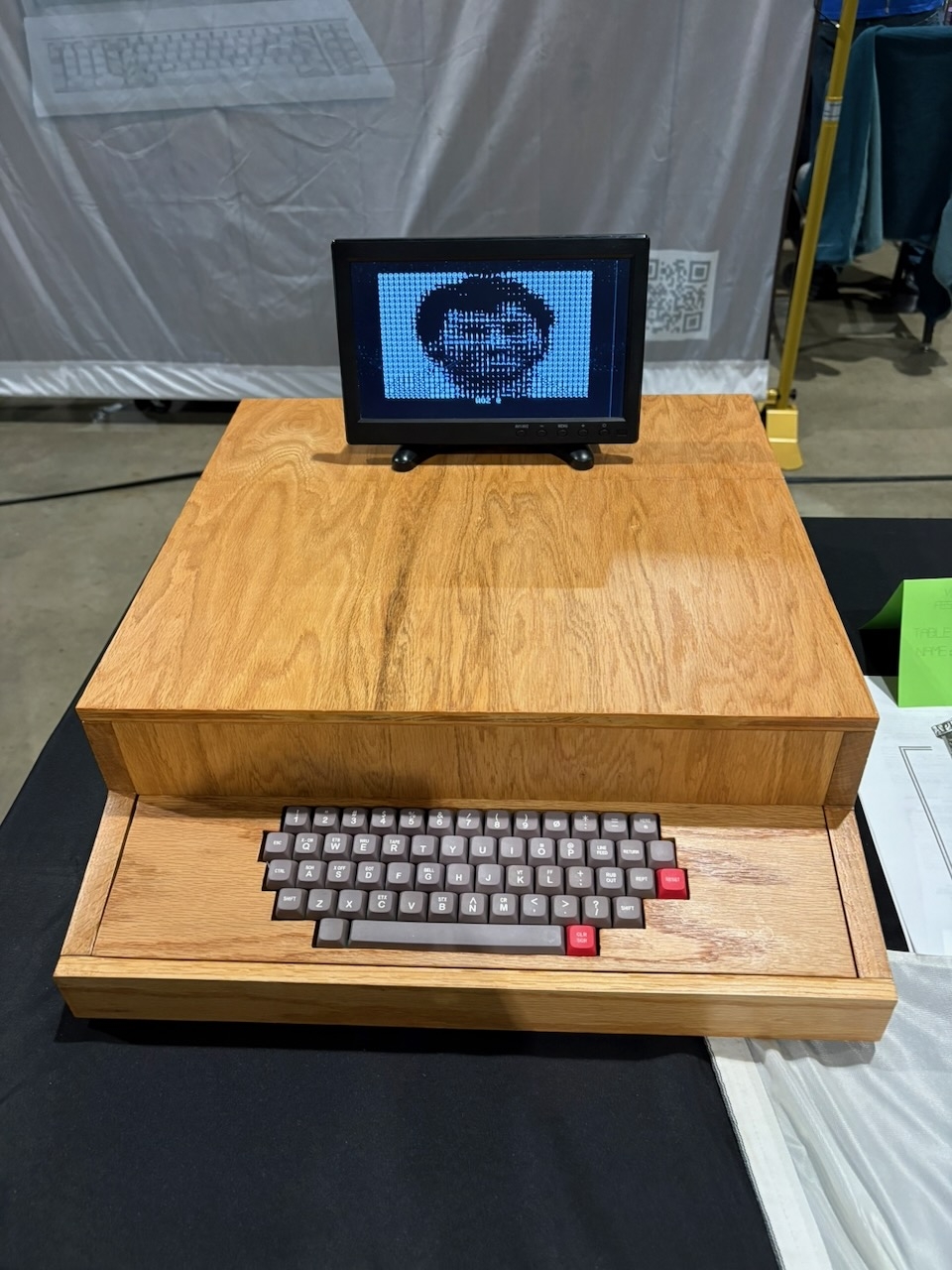
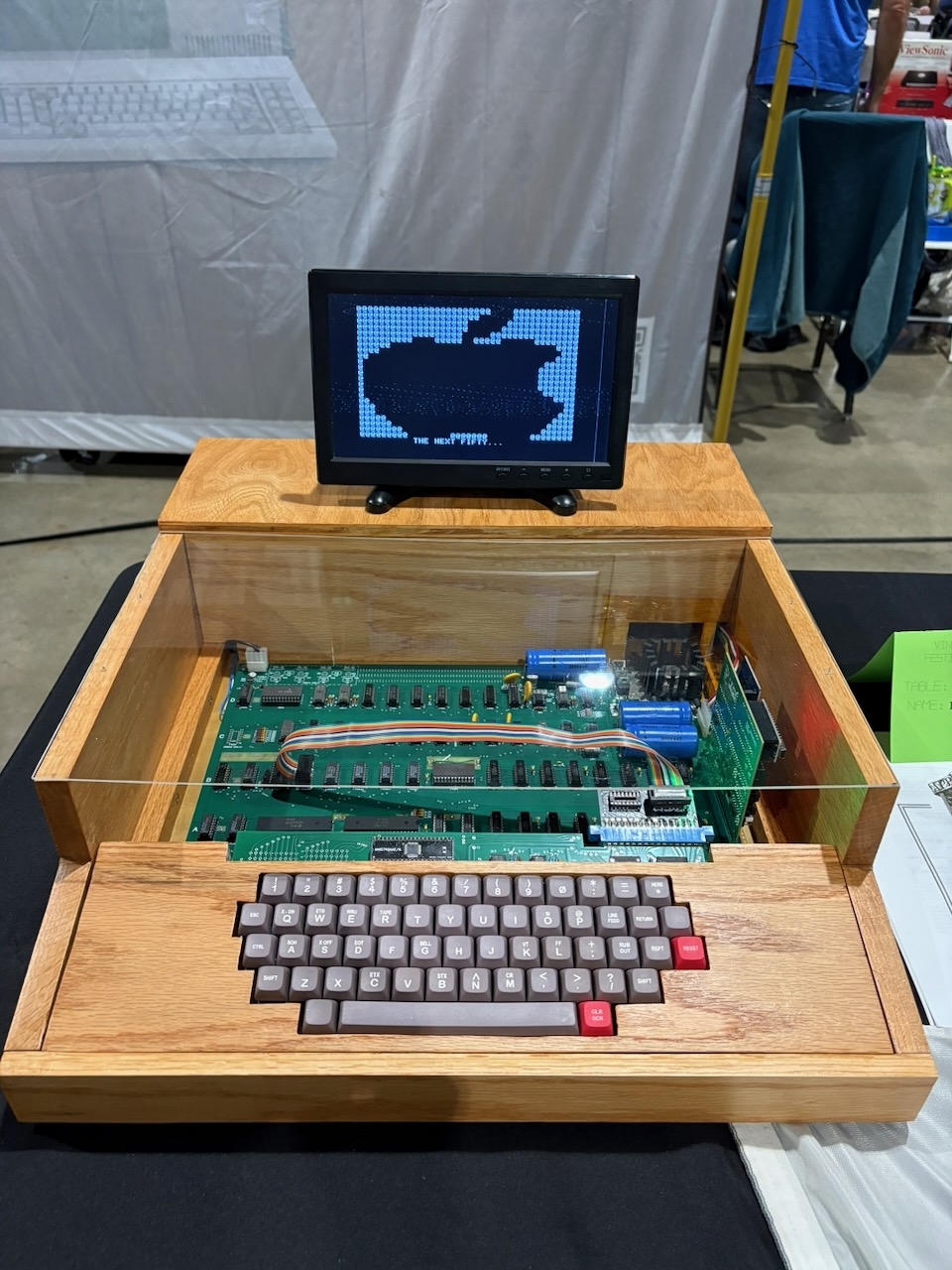


I am presently at the Vintage Computer Festival Mid West in Chicago.
Haapy to show my Apple-1 Replica!
Please support the defense of Ukraine.
Direct or via Unclutter App
No Ads.
No Trackers.
No Social Media.
All Content Locally Hosted.
Built on Free Software.
We have complied with zero government requests for information.
~ Est. 1999 ~
A pillar of corporate stability since the second millenium.
© 1999-2999 Tom Owad
I am quite happy that my Apple-1 survived more than 8 hours of continuous running. I had to leave the front and back of the case open to avoid overheating the 5V voltage regulator. I absolutely need to make holes in the back panel of the case !
In post #2, 'borgmacgb' wrote:
" I absolutely need to make holes in the back panel of the case ! "
Uncle Bernie comments:
Just adding holes in the back panel will not get you anywhere.
You need a plan where the hot air from the LM323K heatsink can rise and get out of the enclosure, which creates a slight pressure differential that sucks in cool air from another case opening at a lower point. This creates an air flow over the heat sink which helps to keep it cool.
So far I've never needed active cooling (fans) on any of my Apple-1 because the custom made enclosures built by "Zero dB" have strategically placed air slots in the lid and air openings in the bottom (they must stand on "feet"). See this thread:
https://www.applefritter.com/content/uncle-bernies-favorite-apple-1-clone-wooden-enclosure
At the moment I'm working on the cooling requirements for Apple-1 equipped with my color graphics card and although it is possible to run it without any active cooling (no fan) Im also experimenting with small 40x40x10 fan whose RPMs can be adjusted (by regulating down the supply voltage), and found out that a very low RPM setting is adequate to keep the heat sink just about 10-15K above room temperature, which is an amazing result for that little air flow. The trick seems to be to let the fan blow directly into the fins of the heat sink from the side. And as it runs at such a low RPM, it can't be heard even in the most silent room (at least for my aged ears).
This is a very promising discovery. So far I've been strictly against using any fans on Apple-1 (the late Steve Jobs would agree, he banned fans from early Apple computers to get the silence of "Zen" or whatever was his motive, even for the price of overheating and consequential program crashes observed with some of the fan-less later models).
I'll post more on the fan experiments to share the ideas if there is a demand for such information.
- Uncle Bernie
IMG_9765.jpeg
IMG_9763.jpeg
IMG_9764.jpeg
IMG_9762.jpeg
IMG_9761.jpeg